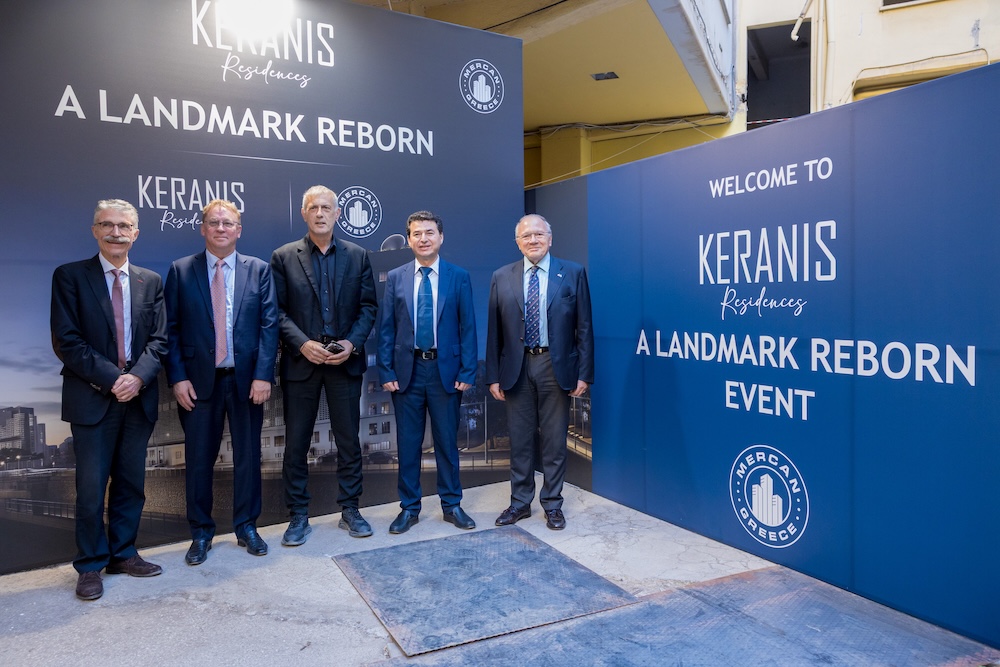
White Space was proud to be part of the strategic communication and event implementation of the Keranis Residencesgroundbreaking event, a landmark real estate development by Mercan Greece in Piraeus.
With a total surface of 29,900 square meters and 408 furnished apartments, Keranis Residences is a project of significant scale and ambition. Its groundbreaking marked an important milestone not only for Mercan Greece, but also for the wider urban regeneration of the area.
For a project of this size, communication cannot be treated as an afterthought. It has to be designed, coordinated and executed with the same clarity and consistency as the project itself.
From strategy to execution
White Space contributed to the communication framework and event support of this milestone, helping bring together the strategic, creative and production elements needed for a high-level corporate event.
Our involvement covered key areas of the event’s communication and presentation, including:
communication strategy
branding and creative direction
content and copywriting support
media relations
audiovisual coordination
video and production support
event communication and on-site implementation support
The objective was clear: to help present Keranis Residences with the level of structure, consistency and professionalism that a project of this scale requires.ουσιαστεί το Keranis Residences με τη δομή, τη συνέπεια και τον επαγγελματισμό που απαιτεί ένα project αυτής της κλίμακας.
A milestone event for Mercan Greece
The event brought together members of the Mercan Greece Board of Directors, business leaders, international investors, more than 50 journalists and representatives of the city, including the Mayor of Piraeus, Yannis Moralis.
This high-level attendance reflected the importance of Keranis Residences as a project with strong investment, urban and social significance.
For White Space, supporting the implementation of such an event meant ensuring that every communication element worked in the same direction: from the overall narrative and brand presence to the audiovisual experience and media visibility.
Communication as part of the project
In large-scale real estate developments, branding and communication are not decorative layers. They shape how the project is understood by investors, stakeholders, media representatives and the public.
A groundbreaking event is not simply a ceremonial moment. It is a strategic touchpoint. It is the first public expression of the project’s ambition, positioning and future impact.
That is why the planning and execution behind it matter.
Through coordinated communication, creative direction and production support, White Space helped frame the project with clarity, credibility and consistency.
A collective effort
We would like to thank Mercan Greece for the trust and collaboration throughout this important milestone. A special thank you to Jery Morgan, Owner of Mercan Group, Jordi Vilanova, President at Mercan Properties, Theodoros Kioutsoukis, President of Mercan Greece, Christos Ditoras, Marketing Director of Mercan Greece, Georgios Korasidis.
Their confidence allowed White Space to actively contribute to the communication, coordination and implementation of a project that leaves a meaningful imprint on the urban landscape of Piraeus.
We are also proud of the White Space team and all partners who contributed to the successful implementation of the event across branding, communication strategy, media relations, creative production, audiovisuals and on-site support.
Projects like Keranis Residences prove that successful communication is not only about visibility. It is about alignment, preparation and execution.
And in projects of this scale, execution is what turns strategy into impact.
Their confidence allowed White Space to actively contribute to the communication, coordination and implementation of a project that leaves a meaningful imprint on the urban landscape of Piraeus.
At White Space, we support real estate and development projects with strategic communication, branding, event communication and performance-driven marketing.
In an era where consumers are overwhelmed with content, advertising, and endless choices, marketing is not a “nice-to-have.” It is the foundation upon which growth, differentiation, and long-term market presence are built.
If you treat marketing as an expense, it will perform like one. But if you recognize it as a strategic, continuous, measurable investment, it becomes the mechanism that transforms a “good product” into a commercial success.
What Marketing Is (and What It Is Not)
Marketing is the structured process of understanding your audience, defining your value proposition, and building communication channels that lead to concrete actions — whether that is a purchase, a sign-up, or meaningful engagement.
It is not advertising. It is not Instagram posts. It is not simply “something that looks nice.”
Marketing is the deliberate design and execution of strategic actions that allow you to understand your audience, shape your value proposition, communicate consistently, and guide your audience toward action — long before the closing of a sale.
Marketing It is not merely advertising, social media content, or superficial visibility. It is not “let’s spend a bit of budget and see what happens.” That approach leads only to inefficiency and wasted resources.
Instead, marketing should be a holistic framework that encompasses:
Branding & Positioning
Market Research & Analysis
Communication Strategy
Digital & Performance Marketing
Content Development & Storytelling
Marketing Automation & Sales Enablement
Why Marketing Is Essential for Every Business
Businesses often focus solely on their product or service. But that alone is not enough. Without effective communication, even the best offering will fail to reach its potential. Marketing:
Differentiates you from competitors
Helps you build an engaged audience
Creates emotional connection with customers
Drives consistent and measurable sales growth
Think of marketing as the translator between your business and your audience. Without it, there is no one to articulate your value in a way that resonates.
Regardless of whether you are a startup, a family-owned company, or a multinational corporation, if you have:
A product or service
A target audience
A desire to grow
…then you need marketing.
Having a digital presence is not enough. You need visibility, strategy, and execution. Your brand must not merely exist — it must communicate clearly, distinctively, and persuasively.
A gap often exists between marketing and sales — and that gap results in lost opportunities. Effective marketing bridges it:
Attracts High-Quality Leads Through segmentation and data-driven targeting, marketing brings in audiences with higher purchase potential.
Prepares the Customer Before Sales Interaction Through content, messaging, and nurture flows, prospects already understand your value — eliminating the need to start from zero.
Builds Trust and Credibility Consistent messaging, visual identity, and communication reassure prospects that your brand is reliable.
Supports the Sales Team With case studies, brochures, decks, and automated email flows, sales teams receive the resources they need to close deals effectively.
Measures, Learns, and Improves Every campaign produces data. Through ongoing analysis and reporting, you identify what works, what doesn’t, and how to optimize.
Marketing Services: What They Include
Depending on your industry, objectives, and stage of growth, marketing may involve a wide range of specialized services:
1. Marketing Strategy
The heart of every initiative. Includes competitive analysis, market positioning, personas, objectives, channels, and KPIs.
2. Branding & Positioning
Defining the foundations of your brand: identity, messaging, tone of voice, slogan, and overall perception.
3. Performance Marketing
Data-driven campaigns on Google Ads, Meta, TikTok, LinkedIn and more — focused on measurable outcomes (sales, leads, conversions).
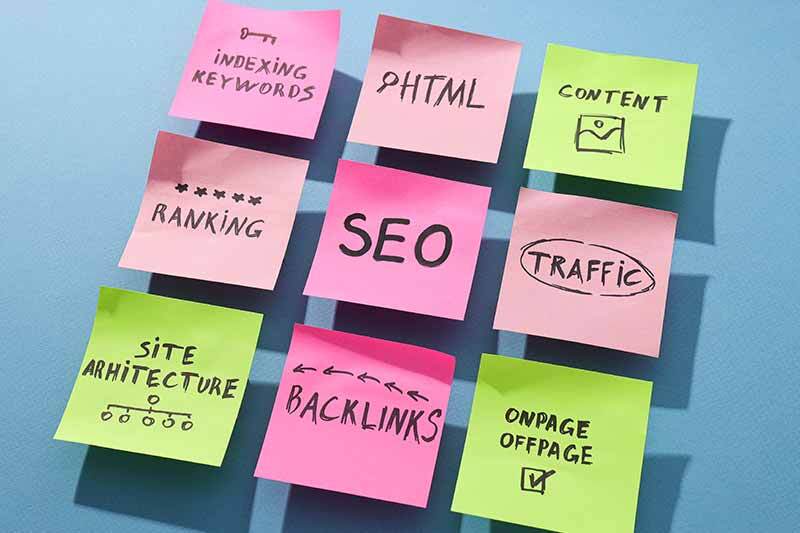
4. SEO (Search Engine Optimization)
Improving your visibility in search engines and driving targeted organic traffic.
5. Content Marketing
Strategic creation of content — articles, videos, infographics, email campaigns, ebooks — that inform, influence, and convert.
6. Social Media Marketing
Building presence, showcasing products, fostering community, and enhancing brand awareness.
7. Email Marketing
One of the most cost-effective channels. Enables nurturing, retention, and recurring revenue.
8. Marketing Automation
Automated workflows, personalized messaging, and behavioral triggers that work for you 24/7.
9. Web & UX Marketing
Your website is the core of your digital presence — and it must be designed to convert, not simply to exist.
Conclusion: Marketing Is Not Optional — It Is Your Growth Engine
f you find yourself saying:
“I’m trying, but I don’t know what actually works.”
“I have a great product, but people don’t know I exist.”
“I have clients, but I don’t have a steady flow of leads.”
…then youneed marketing.
At White Space, we help businesses build marketing strategies grounded in real data, market needs, and growth objectives.
Contact us to explore how we can design a structured, measurable, and creative marketing strategy that delivers results.
Among all the elements a business needs to succeed—branding, product development, marketing, and technology—there is one critical pillar that no company can afford to overlook: sales.
Without sales, there is no cash flow. No revenue. No sustainability.
Yet, sales teams are often underestimated or treated as a simple execution mechanism. In reality, they are the engine that transforms every other business function (marketing, strategy, innovation) into tangible commercial results.
Why Sales Are Essential
The answer is simple: without sales, nothing moves forward.
You may have the best product in the market, an innovative service, or a powerful brand identity. But if you cannot bring these in front of the right customer—and persuade them to make a purchase—everything remains theoretical.
Your product stays on the shelf.
Your services never reach the people who need them.
Your brand never comes to life—because it never interacts with anyone.
Sales are not a one-time action. They are a continuous process of:
strategic outreach,
authentic persuasion,
empathetic service, and
long-term relationship building.
When executed well, sales do not simply create customers—they build trust, loyalty, and repeat business. They create brand ambassadors: people who not only buy from you, but recommend you.
What Influences Sales Performance?
Sales performance is shaped by multiple internal and external factors.
1. The Quality of the Sales Team
Talent, training, and experience play a decisive role. Your salespeople must be:
knowledgeable about the product,
strong listeners,
adaptable,
solution-oriented rather than merely transaction-oriented.
Without targeted marketing, sales become significantly more difficult. Marketing generates awareness and demand. Sales convert that demand into revenue. The two functions must operate in full alignment.
3. The Product or Service
Sales begin with value. If your value proposition is unclear or weak, even the best sales team cannot compensate for it.
4. Market Conditions & Competition
Industry trends, competitive dynamics, and economic context all affect the ease—or difficulty—of selling. For instance, premium products require a different approach during periods of economic pressure.
5. Customer Experience
The sales process does not end at “closing the deal.” Without consistent service, support, and responsiveness, customers will not return.
How Can a Business Increase Its Sales?
1. Focus on the Right Audience
Not everyone is your customer. Prioritize those who:
genuinely need your product,
can afford it,
and match your ideal buyer profile.
Accurate targeting reduces costs and increases conversion.conversion.
2. Improve Your Communication
How you present your product matters. Speak in terms of customer benefits, not technical features. Ask more. Sell less.
3. Develop a Data-Driven Sales Strategy
Use CRM tools to track leads.
Identify bottlenecks in the funnel.
Analyze conversion rates across every stage of the funnel. In simple terms: measure – evaluate – optimize.
4. Train Your Team Continuously
Sales is a skill that requires ongoing practice. Invest in training on:
presentation techniques,
objection handling,
negotiation,
CRM usage.
The stronger your team, the stronger your results.σματα.
provide real-time feedback from customer interactions.
A strong marketing–sales feedback loop is invaluable.ς.
What Sales Are Not
Sales are not:
pressure or manipulation,
a talent reserved for a few,
discounts and price-based tactics.
Sales are the art of understanding customer needs and presenting meaningful solutions. They are the final step in the customer journey—where everything is decided.
Why Many Businesses Fail in Sales
Many companies—especially in Greece—treat sales as a “necessary evil.” They fail to invest strategically, provide limited training, and rely on outdated methods or personal networks.
Common obstacles include:
Lack of a clear strategy: No goals, KPIs, or measurable plan.
Insufficient team training: Salespeople act more like processors rather than consultants.
Lack of technological support: No CRM, sales tools, or analytics.
No monitoring of the customer experience.
Modern selling is not “pushing a product.” It is understanding the customer, offering value, guiding their decision, and building trust. It’s about understanding the customer, providing value, guiding them, and building a relationship.
Sales Are Growth
Sales are the lever of growth. They are the point where marketing transforms into measurable performance.
Without strategic sales:
your brand does not translate into revenue,
awareness does not translate into leads,
and campaigns remain vanity metrics with no commercial impact.
But when sales function effectively:
every customer interaction becomes an opportunity,
teams align behind a unified goal,
your business model becomes scalable.
Every successful sale brings:
liquidity,
market insights,
enhanced reputation,
upsell and cross-sell opportunities,
and valuable data for better decision-making.
The Importance of a Modern Sales Culture
Having salespeople is not enough. You must build a sales culture across the entire organization:
Sales is everyone’s responsibility.
Every customer interaction communicates value, experience, and trust.
Internal alignment between marketing and sales is crucial.
Sales are not just a call—they are an experience.
And every experience must be intentional, personalized, and measurable.
So, How Do You Truly Grow Your Sales?
Sales growth requires:
Strategy — not enthusiasm alone
Tools — not just spreadsheets
Training — not improvisation
Consistency & optimization — not sporadic effort
If you view sales as an investment rather than an expense, then it’s time to work with a team that can support you.
White Space Sales Services
At White Space, we offer a holistic, structured approach to sales development—aligned with your strategic goals and focused on measurable results.
We help you choose the right CRM and train your team not just to use it—but to maximize its value.
Ready to Grow Your Sales Strategically?
White Space is here to help you build your sales model, empower your team, and create a growth engine that delivers consistent results.
Explore our services or contact us to design the next phase of your growth.
Despite the rise of social media, reels, influencers, and bots, one channel continues to deliver results quietly but incredibly effectively: email.
Email marketing is more than sending newsletters. When executed strategically, it can deliver high ROI, boost engagement, keep your brand top of mind, and convert prospects into loyal customers.
What Is Email Marketing?
Email marketing is the process of sending targeted, personalized messages to users who have opted in to receive communication from your brand, with the goal of:
Informing them about your services or offers,
Keeping them engaged with your brand,
Driving them to take action: purchase, booking, registration, or other engagement.
It is not spam, not untargeted mass emails, and certainly not something anyone can do effectively without experience.
It combines expertise, automation, precise targeting, and strong copywriting—transforming a prospect’s inbox into a genuine sales opportunity.
Email is a tool:
Immediate,
Highly convertible,
Cost-effective, allowing continuous engagement with your audience and encouraging action.
Think of each email as a chance to enter your customer’s inbox—and mind. Done right, they won’t ignore you; they’ll remember and return.
Why Invest in Email Marketing?
Wondering if it’s worth it? Here’s why email remains one of the most effective digital tools:
Up to 36x ROI (Return on Investment)
95% of users check their email daily
More cost-effective than ads, SMS, or offline channels
You control the list, not an algorithm
Unlike social media, where reach fluctuates and algorithm changes can impact performance, email marketing is owned data. You decide the strategy and audience.
In short: Email marketing is your digital property.
Types of Email Campaignsyou can utilize
There isn’t just one type of email. Depending on your goal, you can design various campaigns:
1. Welcome Emails
Make a strong first impression; can increase conversions by 80%.
2. Newsletters
Share updates, promotions, or product launches.
3. Promotional Emails
Announce offers or discounts (use frequency wisely).
4. Transactional Emails
Order confirmations, receipts, password resets; subtle CTAs can be included.
5. Re-engagement Emails
Activate inactive subscribers and reduce churn.
6. Survey & Feedback Emails
Gather insights, improve UX, and increase loyalty.
7. Product Launch Emails
Create anticipation, previews, and early adopters.
8. Follow-Up Emails
Encourage completion of actions like form submissions or abandoned carts.
9. Personalized Emails
Customized to name, interests, previous purchases; generate 6x higher CTR than generic emails.
10. Drip Campaigns
Automated sequences triggered by behavior; designed for nurturing, education, and conversion.
Building an Effective Email Marketing Strategy
Success doesn’t come from a pretty template—it comes from strategy. Don’t send emails without a plan.
1. Set Clear Goals
Decide the purpose of each email. Ask yourself:
Do i want to increase sales?
Do i want to re-engage inactive customers?
Do i want to promote content?
Your goal determines the email type, frequency, and content.
2. Build a Quality List
Avoid purchased lists or forced opt-ins. Grow your list ethically with users genuinely interested in your content.
3. Segment Your Audience
One email does not fit all. Targeted content increases CTR.
Segment by:
Purchase history
Website behavior
Interests
Funnel stage
4. Use Automations
Automate workflows for key touchpoints:
Welcome series
Abandoned cart reminders
Anniversaries & birthdays
Post-purchase follow-ups
Re-engagement campaigns
5. Optimize UX & Content
Rules:
· Responsive design
· Clean layout
· Compelling subject line
· Clear CTA (one per email)
Provide real value, not just sales pitches.
6. Measure & Optimize
Without measurement, there is no improvement.
Run A/B tests on subject lines, buttons, and layouts.
Check Open Rates, CTR, and Conversion Rates.
Repeat what worked.
Without measurement, there is no improvement. Without these, you’re not doing marketing — you’re gambling.
Common Mistakes & How to Avoid Them
Using purchased lists → zero engagement, possible blacklisting.
Sending too many emails → annoying your audience.
No CTA → if you don’t ask, why send?
Weak subject lines → 50% of success depends on it.
Not mobile-optimized → 60–80% of emails are opened on smartphones.
No analytics → if you don’t measure, you can’t improve.
Lack of strategy → emails without purpose waste time.
Without strategy, email marketing is just “sending.” With strategy, it delivers performance.
Email Marketing: Not Outdated, Just Underutilized
Email is the only channel you fully own, independent of algorithms. Done right, it generates recurring revenue, engagement, and measurable conversions.
It’s more than newsletters—it’s a personal connection with your audience.
Maximize Your Email Marketing with White Space
At White Space, we design targeted email journeys, implement strategic automations, organize segmented lists, and craft content that gets opened and converts.
Start building your tailor-made email marketing plan with us today.
In a world where products and services look increasingly alike, what truly differentiates successful businesses isn’t always what they sell — but how they sell it. And everything begins with one thing: effective sales training.
Your sales team doesn’t just need motivation. It needs the right tools, the right knowledge, and an environment that supports growth.
Why do so many businesses fail to increase sales?
Before discussing solutions, we need to look at the real sources of the problem.
Many companies invest in marketing, CRM tools, and advertising — yet sales don’t increase. Why?
Here are the most common reasons:
No commercial strategy
Sales teams often operate “approximately.” There is no clear funnel, no defined ideal customer, and no structured sales process.
Salespeople are not properly trained
People are hired with “experience,” but without methodology. No shared language, no shared tools, no shared approach.
No monitoring or passive monitoring
No KPIs, no reports, no insights into what works. Sales rely on luck or connections.
The customer doesn’t understand the value proposition
If the team can’t clearly explain why someone should buy from you instead of a competitor, the sale is lost before it even starts.
Lack of confidence and motivation
When people don’t believe in the product, in themselves, or don’t feel they’re developing, performance stagnates.
Before blaming the market or competitors, we must look inward: Have we equipped our team to succeed?
How Greek businesses typically handle sales:
The mindset around sales in Greece has improved, but challenges remain. Here are the most common issues — some of which you may recognize.
1. Sales are treated as a “necessary evil”
Seen as something that “someone has to do,” not as a strategic pillar.
So businesses:
Don’t invest in structure
Don’t measure results consistently
Don’t build a sales culture
2. Overdependence on the “golden boy”
Entire departments rely on one top performer. When that person leaves, sales collapse.
3. No strategy & no KPI framework
Missing essentials like:
Clear goals (MQL → SQL → Win rate)
CRM & pipeline tracking
Lead scoring
Monthly conversion reports
This leads to blind selling and zero forecasting.
4. Training is undervalued
Sales Training is viewed as a “once-a-year seminar,” not as continuous development.
As a result, teams repeat the same mistakes without realizing it.
Smarketing (sales & marketing integration) is still unfamiliar territory.
6. No long-term growth plan
Many businesses operate reactively: when sales drop, they start hiring, launching campaigns, or searching for quick fixes. There is no steady, structured plan for truly scaling their commercial model.
In contrast, the businesses that understand that real growth starts with a well-trained, targeted, and empowered commercial team are the ones that stand out.
Sales: The Oxygen of the Business
No business grows without sales. You may have the best product — but if you can’t sell it, you don’t have a business. You have an idea.
Sales:
Bring revenue
Fund marketing, development, operations
Confirm there is real demand
Build customer trust
Provide feedback on what works
A strong sales engine protects the business during crises and accelerates growth when opportunities appear.
Sales are not just another department. They are the heart of the business ecosystem. And the better trained the people who run it are, the stronger the whole organization becomes.
The White Space Approach to Sales Training
At White Space, we don’t offer generic sales seminars. We design every program from scratch based on your real challenges.
Our process includes:
Assessing team capabilities
Understanding your sales goals
Designing custom training content
Practical training with real scenarios
Our philosophy is simple:
Training that isn’t applied immediately is just theory.
We focus on practical improvement and measurable outcomes.
Let’s be honest: you’ve invested time, effort — perhaps even budget — into creating a website that looks “good.” And yet… Google doesn’t seem impressed. Organic rankings are low, traffic is limited, and sales are stagnating.
At this point, the classic question arises: «Do I need to rebuild my website?»
The answer is often no. A new site isn’t necessary. What you need is to understand what’s holding back your current site — and that’s exactly what a proper SEO Audit does.
What Is (Really) an SEO Audit?
An SEO Audit is not just a spreadsheet filled with technical jargon. It’s not a report you read once and forget.
An SEO Audit is a check-up of your digital presence: it shows you precisely what’s working, what needs fixing, and where you’re losing opportunities for traffic and leads.
It’s a systematic evaluation of your website aimed at identifying issues that hinder:
Your visibility on Google
User experience
Conversions
An SEO Audit doesn’t just focus on keywords. It also examines:
Site speed
URL structure
Titles and meta descriptions
Headings
Mobile usability
Broken links
Duplicate content
Indexing issues
…and much more
The best part? It doesn’t require a full redesign. You don’t need to change everything. You just need to understand where you are and how to get where you want to be.
Just like you visit a doctor for check-ups, you conduct an SEO Audit to keep your website healthy and performing.
When Was the Last Time You Looked “Behind the Website”?
If your answer is “never” or “I don’t know how,” then an SEO Audit is the first and most important step. Google sees your site differently from you — and it relies on data, not aesthetics.
You urgently need an SEO Audit if you answer “yes” to any of the following:
You redesigned or migrated your site but saw no improvement
Organic traffic has dropped without an obvious reason
Your pages don’t appear in Google search results
You have outdated content that was never optimized
You run Google Ads but see low conversion rates
You’ve never conducted a technical check for speed, mobile, or errors
SEO Audit Isn’t Just About SEO — It’s About Your Entire Digital Presence
A proper SEO Audit isn’t just about climbing the search rankings.
It helps you understand:
Which pages are “dead”
Which content is worth enhancing
Which technical issues are lowering rankings or wasting budget
How you may be negatively affecting your advertising campaigns
The audit acts as a mirror for your online presence, often revealing hard truths that… can be fixed. It doesn’t just help you sell — it helps you build a brand with a clear promise and lasting value.
How an SEO Audit Affects Your Performance Campaigns
If you think SEO is “just for Google,” think again. A proper SEO Audit not only improves organic search but also enhances paid campaigns, especially if you run Google Ads or social media campaigns.
How are they connected?
Every performance campaign ultimately leads users… to your website.
If your landing page is slow, cluttered, or poorly structured:
Your CPC rises
Performance drops
Users leave without converting
An SEO Audit identifies these issues and helps optimize the environment where users “land,” resulting in:
Improved user experience
Higher conversion rates
Lower cost per acquisition (CPA)
What Does a Comprehensive SEO Audit Include?
A proper audit goes beyond keywords. It examines everything affecting your visibility. Here are the five core areas:
1. Technical SEO
Start with the “mechanics.” Slow-loading pages, broken links, non-responsive design, or structural errors cause Google to ignore your site.
Key questions:
Does the site load quickly on mobile?
Do you have a proper sitemap and robots.txt file?
Are your URLs clean and SEO-friendly?
Are there 404 errors or incorrect redirects?
Tools commonly used: Google Search Console, PageSpeed Insights, Screaming Frog, Ahrefs.εργαλεία όπως: Google Search Console, PageSpeed Insights, Screaming Frog, Ahrefs.
2. On-Page SEO (What the user sees — and Google)
Google reads your titles, headings, descriptions, images, keywords, and internal links. If these elements aren’t structured correctly, even great content won’t rank.
A thorough SEO Audit:
Checks keyword usage and placement
Identifies pages missing meta descriptions
Analyzes headings and content structure
3. Content Audit
Your content may be good, but is it effective?
An audit examines:
Pages driving traffic
Pages with high bounce rates
Pages with thin or duplicate content
Missing keywords
The goal: determine what adds value, what needs updating, merging, or removal.συρθεί.
4. Backlinks and Off-Page SEO
It’s not just about what you say — it’s also about who mentions you.
Analysis includes:
What backlinks you have
Whether referring pages are trustworthy
Presence of spammy or toxic links
A strong backlink profile boosts rankings; a weak one can undermine your efforts.εβάσει. Ένα προβληματικό, μπορεί να σου ρίξει όλη την προσπάθεια.
5. Competitive Analysis
SEO Audit isn’t just self-reflection — it’s market strategy.
Who competes for your target keywords?
Where do they rank higher than you?
Which topics or opportunities have you missed?
This analysis uncovers insights for new content, keywords, and growth opportunities
Benefits of an SEO Audit
Clear understanding of your current position
Actionable plan with prioritized improvements
Identification of opportunities for new traffic and keywords
More efficient ROI on digital investments
Higher-quality traffic = higher chances for leads/sales
When Should You Conduct an SEO Audit?
If it’s been a while since your last performance review
When planning a new content strategy
When changing structure, menus, or categories
When you simply feel “something isn’t working”
At least once a year (or every six months)
After the Audit
The audit alone isn’t enough.
The critical step is implementing the action plan:
Which pages need rewriting?
Which technical fixes are required?
Which content should be strengthened?
What needs adjustment for performance campaigns?
What are the quick wins?
Do you truly want to improve your online presence?
Then don’t stop at keywords. Start with the foundation: assess the ground you’re standing on.
A professional SEO Audit can save thousands in lost traffic — and put your website on a growth trajectory without overspending on ads.
Do you want to do it together?
An SEO Audit isn’t a “luxury.” It’s a compass. It tells you where you are and where you need to go — based on data, not assumptions.
Do you want to know what’s really happening on your site and how to improve its performance — organically and via paid campaigns?
The White Space team delivers SEO Audits that go beyond theory, providing actionable insights and a clear roadmap.
Explore our services and take the first step toward a website that works for you.
In a world full of choices and noise, your audience doesn’t have time to analyze every brand or offer they encounter. People scan quickly, compare, and decide — to engage or to move on. What wins them over? Not always price. Not even quality. What truly makes a difference is the perceived value they expect to receive.
And this value must be communicated clearly, immediately, and persuasively. The tool for achieving this is your value proposition.
What Is a Value Proposition?
A value proposition is a strategic statement that encapsulates the essence of your brand or service. It is not just an “offer”; it is a promise of value. It tells your customer:
What exactly you provide
Who you serve
Which problem you solve or need you meet
What makes you unique
If your value proposition is vague, generic, or focused on your company rather than the customer, you’ve already missed your chance. A strong value proposition gives the customer exactly what they need to choose you — without hesitation.
Why It Matters
A value proposition is not a marketing slogan. It is the foundation on which your commercial strategy is built. It answers the question your customer asks every time: “Why should I choose you over someone else?”
It is important because it:
Clearly defines your position in the market
Helps the audience understand the value they receive, not just what they buy
Aligns all marketing and communication channels under a cohesive core
Accelerates the sales cycle by clarifying what you offer and why it matters
At every touchpoint — advertisement, presentation, website, email — your value proposition serves as a litmus test: Am I relevant? Am I clear? Am I persuasive?
If the answer is “no,” the customer moveson.
Why You Need a Value Proposition
A well-crafted and meaningful value proposition acts as a multiplier for your entire business effectiveness. It is not just a marketing tool — it is a tool for alignment, growth, and focus. Key benefits include:
Better targeting and more effective communication with your audience
Increased conversion rates
Greater consistency across all communication channels
Internal focus for your team
Differentiation in competitive markets
In short, a value proposition doesn’t just help you sell — it helps you build a brand with a clear promise and enduring value.
The Core Components of a Strong Value Proposition
A compelling value proposition is more than a “clever phrase.” It is a structured statement built on four pillars:
1. Clarity
If it is not immediate and easy to understand, it fails. The customer should grasp what you offer and why it is relevant within seconds, without needing a second explanation.
2. Focus on the Customer’s Problem
Your value proposition is not about stating who you are — it’s about showing what you can solve. Customers care about the problem they face — and who can solve it most reliably, efficiently, or cost-effectively.
3. Differentiation
If you don’t show what makes you unique, you are “just another option.” A strong value proposition highlights your added value compared to competitors — whether through quality, expertise, speed, experience, or a unique approach.
4. Proof
Promises without evidence are empty. A strong value proposition is supported by examples, KPIs, testimonials, or case studies. You not only claim value — you demonstrate it with numbers, experiences, and results.
What Makes a Value Proposition Effective
Having a value proposition is not enough; it must work for both your audience and your team. A strong, effective value proposition:
Is integrated and repeated across key channels: website, pitch decks, email, advertising, onboarding
Speaks the customer’s language, not marketing jargon
Focuses on value, not features
Communicates in terms of “what the customer gains,” not “what we do”
Is consistent with the brand experience across all touchpoints
How to Build a Compelling Value Proposition
A strong value proposition does not happen by chance — it requires strategy, understanding, and a structured approach. It is not a momentary inspiration; it results from a process combining data, empathy, and clear targeting.
The process includes:
1. Audience & Market Research
Without understanding your buyer persona, every promise is meaningless. Who are your customers? What are their fears, frustrations, and goals?
2. Mapping Needs to Solutions
For each need, match the benefit you provide. Focus on pain relievers (problems solved) and gain creators (enhancements offered).
3. Simple & Human Formulation
A template you can use:
“For [target audience] who [problem], we offer [solution] that [benefit], unlike [alternatives].”
4. Test & Refine
Test different formulations with real audiences (e.g., landing pages, ads, A/B testing). Identify the version that makes people say: “This is exactly what I need!”
5. Continuous Use & Integration
A value proposition is not for a single slide and then forgotten. It guides marketing, sales, UX, design, service, and content. If it isn’t visible everywhere, it isn’t effective.
Build Your Value Proposition with Us
If you feel your brand message is unclear, customers don’t understand your real value, or you’re losing opportunities because you’re not saying the right things to the right people, we can help.
At White Space, we design branding strategies that go beyond theory — transforming into memorable messages, clear positioning, and experiences that stand out.
Have questions or want to speak directly with us? Contact us today — and let’s get started
If your business has a physical location — such as a store, office, clinic, restaurant, hotel, or even a workshop — one question should be on your mind:
When someone searches locally for what you offer, do you appear?
If the answer is “no” or “not as well as I’d like,” then Local SEO might be the most important growth step you haven’t taken yet.
What Is Local SEO?
Local SEO refers to the set of actions that help your business:
Appear at the top of local search results (e.g., “dentist Kifisia,” “hair salon Thessaloniki,” “hotel Pelion”)
Stand out on Google Maps and in local packs
Gain the trust of people nearby
In simple terms: When people search near them, can they find you?;
Why It Matters
Google thinks geographically.
If someone types “coffee shop,” Google will show nearby options. They don’t even need to type “coffee shop in Pangrati” — Google already knows.
According to Google statistics:
46% of searches have local intent
76% of mobile local searches result in an in-person visit the same day
Approximately 28% of those visits lead to a purchase
If you’re not appearing in these searches, you’re losing customers simply because they didn’t find you first.
What You Need to Get Started with Local SEO
1. Google Business Profile (formerly Google My Business)
If you run an e-shop without a physical location, this may not be critical. But if you serve a local audience, it’s essential.
Ensure you provide:
Name, Address, Phone (NAP)
Business hours
Website & photos
Accurate categories (e.g., “Civil Lawyer,” not just “Lawyer”)
Tip: If your business doesn’t appear on Google Maps when you search for it, something is wrong.όταν κάνεις αναζήτηση για τον εαυτό σου, κάτι έχεις κάνει λάθος.
2. Proper Keyword Placement on Your Website
Many sites fail to mention their location entirely.
If your office is in Patra, make sure it appears:
In headings
In meta titles
In the footer
On the “About Us” page
In the URL (where relevant)
Example:
If you’re a veterinarian in Peristeri, use “Veterinarian Peristeri,” not just “Veterinarian.”
3. Online Reviews (and Managing Them)
Reviews are the most powerful local ranking factor.
Ask your customers to leave reviews on Google
Respond to all reviews — even negative ones
Communicate naturally and authentically
You don’t need 500 reviews. 10–15 genuine, recent, well-written reviews are often enough to outperform competitors.
4. Consistent NAP Information
Your Name, Address, and Phone must be exactly the same across all online platforms:
Website
Google
Facebook
Skroutz / Booking / TripAdvisor
Online directories & maps
Inconsistencies confuse Google — lowering your ranking.
5. Local Content
Create content relevant to your area and your audience’s needs.
Examples:
“Guide to the Best Family Outings in Nea Smyrni” (if you run a playground there)
“What to Do in Tsagarada in Autumn” (if you run a hotel)
Google will recognize that you speak the language of the place — and rank you higher for local residents or visitors.
Bonus: Can Local SEO Work for E-Commerce?
Yes — if you have both an e-shop and a physical store, Local SEO can:
Increase foot traffic
Drive in-store pickups
Bring repeat customers from your area
Conclusion: Want to Be Found First? Signal Google.
Local SEO is the simplest way to appear in front of customers near you, exactly when they need you.
And the best part? It’s free — if you know what you’re doing.
How We Help at White Space
We assist businesses to:
Set up or optimize their local presence
Appear first in local search results
Create content that elevates their visibility
Turn casual passersby into paying customers
Do you want to see how your business currently performs in local SEO?
Send us a message. We’ll show you what Google sees — and how to improve it.
If you have a physical store, provide services, or run a small but growing brand, this question will eventually arise:
“Should I create an e-shop? And if so, when is the right time?”
It’s the right question — because building an e-shop is not just a technical task. It is a strategic decision, and timing matters almost as much as execution.
There Is No “Perfect Time” — But There Are Clear Signals
The truth is, there is no one-size-fits-all answer. However, there are clear indications that it’s time to seriously consider e-commerce.
1. You’re starting to sell products… with “makeshift methods”
You take orders via Instagram, DM, Viber, or phone. You record them manually, send payment details via messages, and track availability approximately.
This may work at first, but:
It is not scalable
It leads to errors and delays
It does not inspire professionalism
It prevents you from measuring performance
If you are losing control of manual sales processes, an e-shop is no longer a luxury — it’s a necessity.
2. Your customers ask: “Can I order online?”
This is the simplest and clearest sign. If your audience seeks convenience, online payment, and fast access to your products, you need to be there — and preferably before someone else gets there first.
3. You have structure, inventory, and the ability to fulfill orders
Launching an e-shop is pointless if:
You don’t yet have products
You cannot ship them
You lack invoicing, warehousing, or logistics
But if these elements are in place, you can take the next step and transform an effective operation into a fully online business.
4. You have repeat customers and brand loyalty
If you already have customers who trust, seek, or recommend you, then:
An e-shop helps you build a long-term audience, not just one-off sales
It will serve them more efficiently
It opens new communication channels: email, remarketing, loyalty campaigns
5. You want to grow your business strategically
An e-shop is not just about sales. It is a tool to collect data:
Which products sell best
When demand peaks
Which customers buy which products
Which channel performs (Google Ads, Social, Organic)
An e-shop allows you to make decisions based on data, not instinct.
When It’s NOT the Right Time to Launch an E-Shop
When you don’t yet have products or a fulfillment method
When you see it as a “trend” rather than a growth channel
When you want “something cheap and temporary just to exist”
When you lack time to support it with content, management, and promotion
An e-shop is not a showcase. It is a tool — and it requires care to work effectively.
In Summary: You don’t build an e-shop simply because you “should.” You build it when you are ready to leverage it.
If you have:
Products or services that sell
An audience looking for you
Operations that require organization
The desire to grow strategically
…then you are closer than you think to launching an e-shop that works for you — and not the other way around.
How We Help at White Space
We build e-shops that:
Are user-friendly (UX-first)
Are fast, responsive, and SEO-optimized
Integrate with marketing tools, CRM, and loyalty systems
Are designed to sell
Thinking about launching an e-shop?
We can help you do it at the right time, the right way. Send us a message, and let’s explore how we can support you in building your e-shop.
You have a campaign that seems to be performing well.
CTR is high.
Clicks are increasing.
Visits to your website are multiplying.
And yet… No orders. No leads. And you start asking yourself:
“If the metrics are positive, why am I not seeing results?”
The answer is simple: All metrics tell the truth — but they don’t tell the whole story.
When viewed in isolation or without context, data can easily be misinterpreted. Metrics don’t lie — but they can mislead if not analyzed correctly.
Let’s take a closer look at what the most common metrics usually indicate — and, more importantly, what they leave out.
1. Impressions — Nice for the ego, not for sales
Impressions show how many times your ad was displayed. It’s a nice number for reports, but it doesn’t reveal whether anyone actually noticed, understood, or cared.
What it tells you: Your campaign had reach. What it doesn’t tell you: How many people actually paused to see your message, or remember your brand.
2. Clicks — A good sign, but not the final destination
A high CTR indicates that your message piqued curiosity. But if users leave after three seconds, then… what does it really mean?
What it tells you: Your message was interesting enough to get attention. What it doesn’t tell you: Whether the user intended to purchase, read the content, or found what they expected.
Tip: Track post-click behavior — time on page, navigation, scroll depth, bounce rate.
3. Bounce Rate — Not always bad (don’t panic)
A high bounce rate doesn’t necessarily mean your site is flawed or that the ad attracted the wrong audience.
What it tells you: The user entered your site and left without further action. What it doesn’t tell you: Whether they got what they needed quickly or completed a one-step action (e.g., phone call, email, download).
Tip: Examine bounce rate alongside time-on-page, scroll depth, and session recordings. The full picture is multi-dimensional.
4. Engagement — Great, but… not necessarily sales
Likes, shares, and comments feel good — and they are useful for awareness. But they don’t pay the bills.
What it tells you: Content is relevant or resonates emotionally. What it doesn’t tell you: Whether the audience is ready to buy or genuinely interested in your product or service.
Tip: Don’t stop at surface-level metrics. Combine engagement with website actions (click-throughs, goal completions).
5. Conversions — The king of metrics (only if you understand it)
We all say: “Conversions matter.” And we agree — but what does that really mean?
Conversions are the most critical — and often the most misunderstood metric. A conversion is not only a purchase. It can also be:
Form submission
Phone call
Newsletter sign-up
Add to cart
Request for quote
If you haven’t defined which conversions matter most to your business, the numbers are meaningless.
What it tells you: Some users performed an action you consider important. What it doesn’t tell you: How close you are to your ultimate goal, or which conversions truly generate business value.
Tip: Separate conversions into primary and secondary (micro-conversions) and analyze their performance individually.
If Your Metrics Aren’t Telling You the Right Story…
…perhaps it’s time to look at them differently.
At White Space, we don’t just review KPIs.
We dive deep into the data, interpret it correctly, and turn it into strategy — so you know what works, what doesn’t, and what needs to change.
Want us to decode your metrics?
Send us a message. We’ll show you what they say — and, more importantly, what they don’t.
To provide the best experiences, we use technologies like cookies to store and/or access device information. Consenting to these technologies will allow us to process data such as browsing behavior or unique IDs on this site. Not consenting or withdrawing consent, may adversely affect certain features and functions.
Functional
Always active
The technical storage or access is strictly necessary for the legitimate purpose of enabling the use of a specific service explicitly requested by the subscriber or user, or for the sole purpose of carrying out the transmission of a communication over an electronic communications network.
Preferences
The technical storage or access is necessary for the legitimate purpose of storing preferences that are not requested by the subscriber or user.
Statistics
The technical storage or access that is used exclusively for statistical purposes.The technical storage or access that is used exclusively for anonymous statistical purposes. Without a subpoena, voluntary compliance on the part of your Internet Service Provider, or additional records from a third party, information stored or retrieved for this purpose alone cannot usually be used to identify you.
Marketing
The technical storage or access is required to create user profiles to send advertising, or to track the user on a website or across several websites for similar marketing purposes.