Germanos SEO
SEO Strategy
for Germanos

Turning expertise into a reason to choose.
POLIECO Hellas manufactures systems for drainage, underground cable protection, and infrastructure access. Its manufacturing operations in Greece and the engineering expertise of the wider European group create a value proposition that a product catalog can only partially convey.
The company’s contribution to a project includes guidance on system selection, documentation to support its suitability, and assistance with questions that arise during installation. The task was to identify which of these capabilities could provide meaningful reasons to choose POLIECO and become central to its brand positioning.
White Space undertook a comprehensive brand strategy study. We examined the company, its competitors, its product families, and the needs of the people who influence system selection across water, energy, telecommunications, and private development projects.
Our goal was to establish clear brand positioning and translate it into practical direction for corporate communications, product presentation, and the company’s sales approach.
The same product. Different selection criteria.
When two systems meet the same technical specification, differentiation must answer a fundamental question: why choose POLIECO?
The answer depends on the role of the person evaluating the solution:
The first challenge was to bring these different priorities together under a coherent brand promise.
The second was to distinguish company capabilities from meaningful competitive advantages. A capability becomes strategically relevant when it matters to the buyer, sets the company apart from competing offerings, and can be supported by evidence.
The third challenge was application. The positioning needed to guide a corporate presentation, a product page, and a technical or sales discussion consistently, while maintaining the accuracy the industry demands..
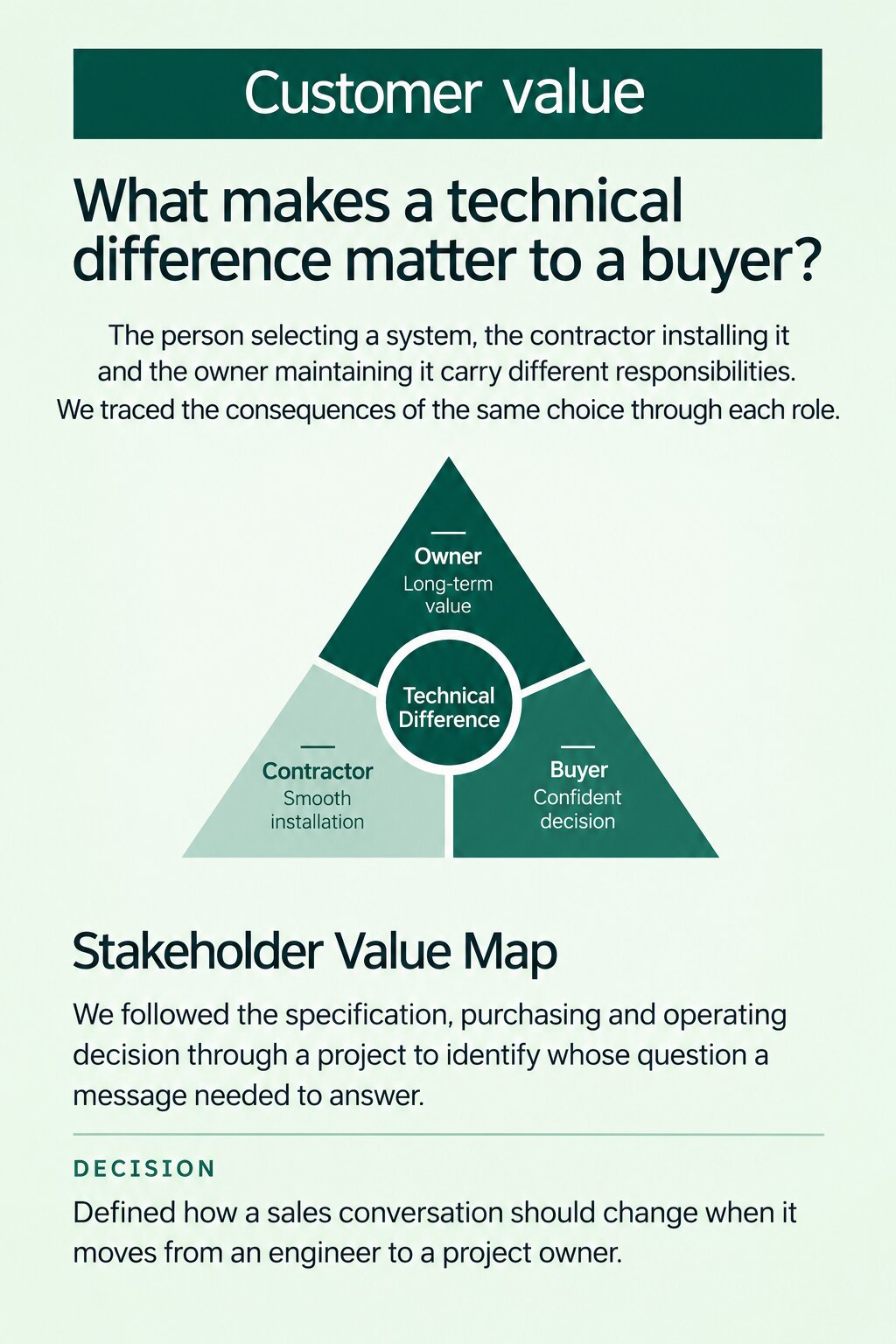
We connected engineering expertise with the value each project stakeholder looks for.
The study covered five areas of research and analysis: management interviews, a competitive review, stakeholder analysis, product and market mapping, and an assessment of positioning and differentiation.
Through this process, we developed a proposed positioning for POLIECO as an infrastructure partner, emphasizing technical guidance, evidence-based system selection, and installation support.
1. Assessing market positioning and opportunities for differentiation
Management interviews identified company capabilities, examples of customer support, and priorities for growth. In parallel, we examined how competing manufacturers presented their products, applications, technical documentation, and support services.
We treated each potential advantage as a hypothesis to investigate: who does it matter to, how does it compare with competitors’ promises, and what technical evidence or project experience can support it?
The Winning Zone, Strategic Positioning Map, and Differentiation Framework structured this assessment and helped define a proposed market position, with a clear direction for further validation through conversations with design engineers and customers.
2. Translating technical features into customer value
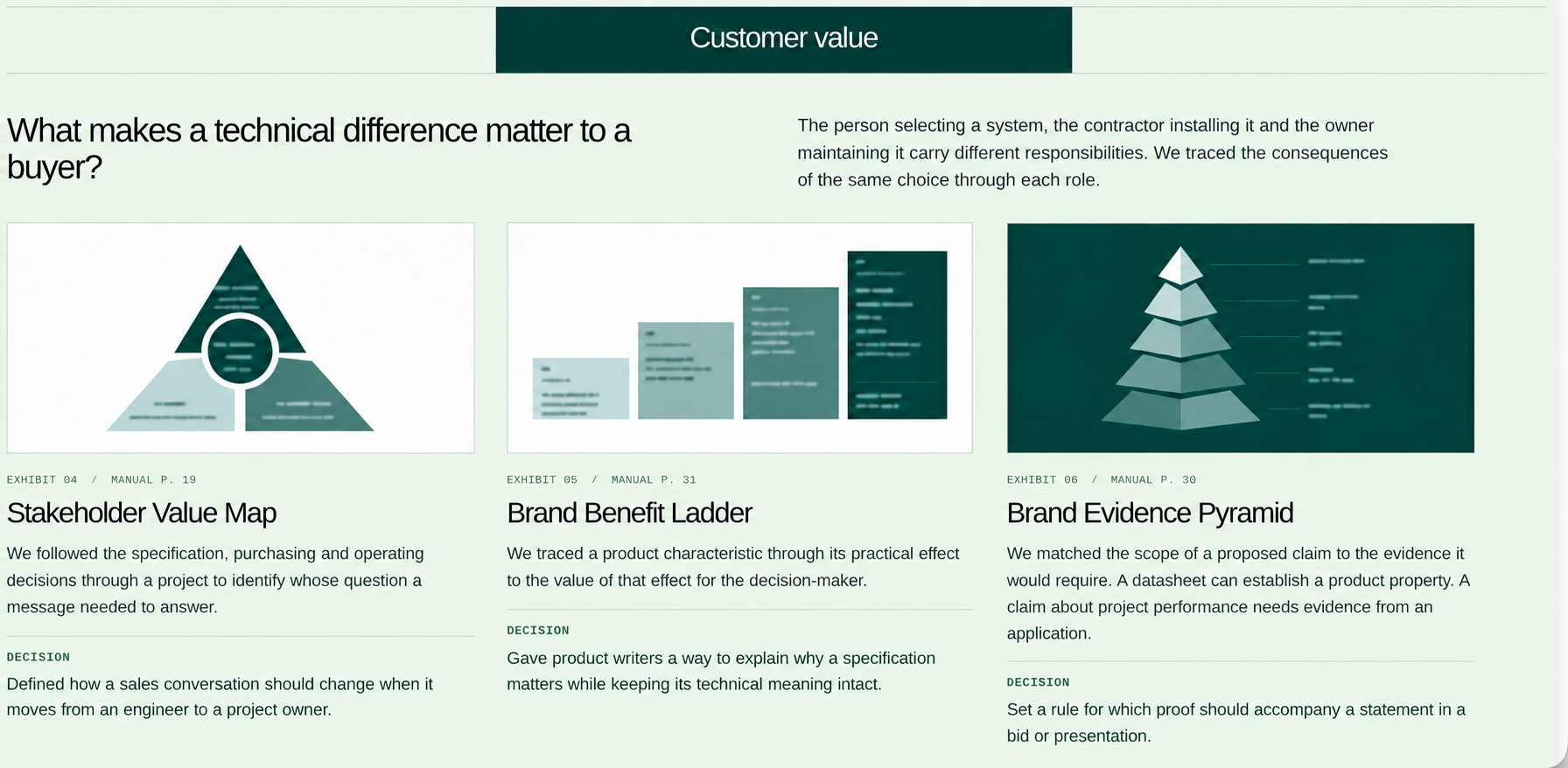
Using the Stakeholder Value Map, we mapped who specifies, purchases, installs, and operates a system. This helped identify the questions that communications need to answer at each stage and for each role.
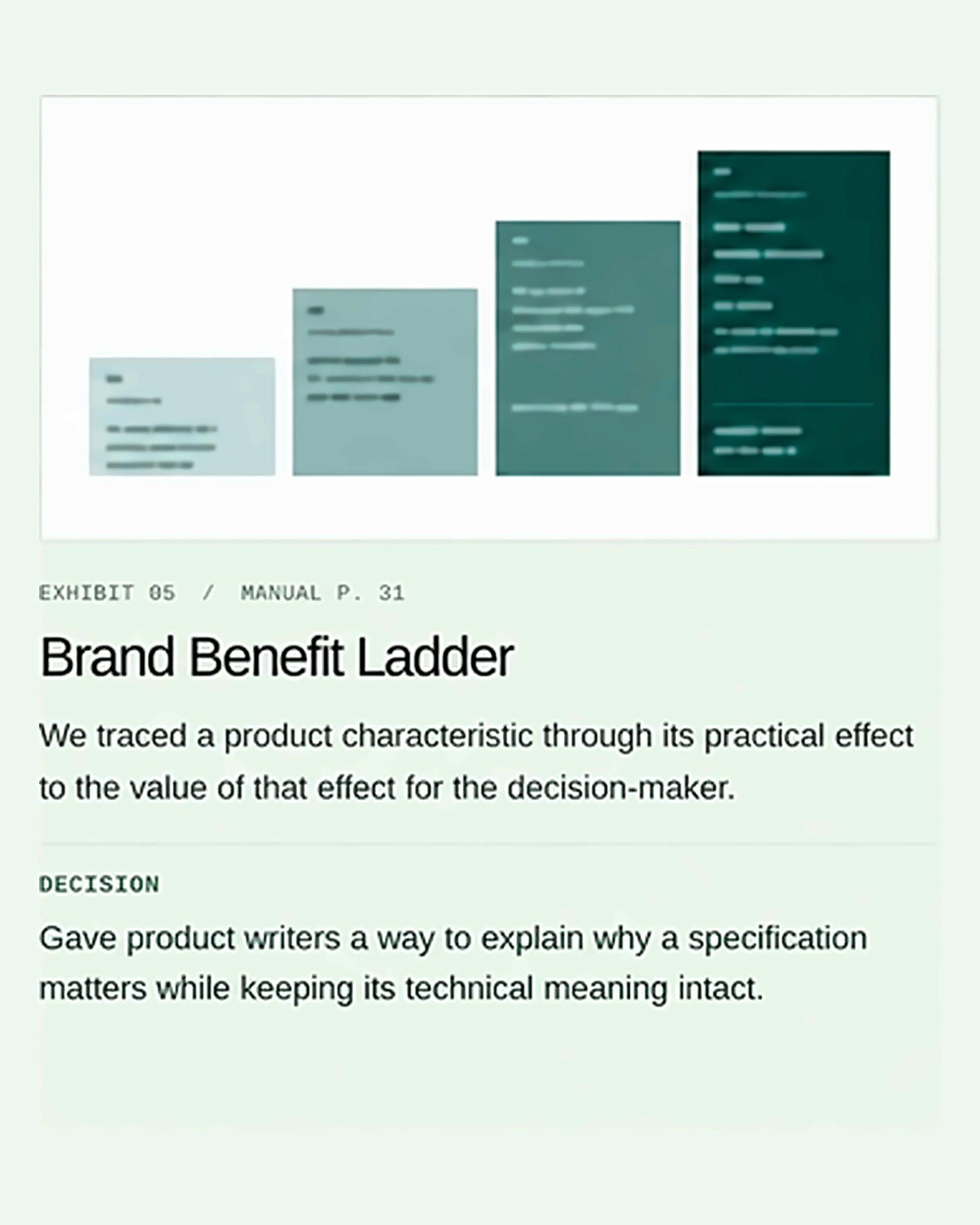
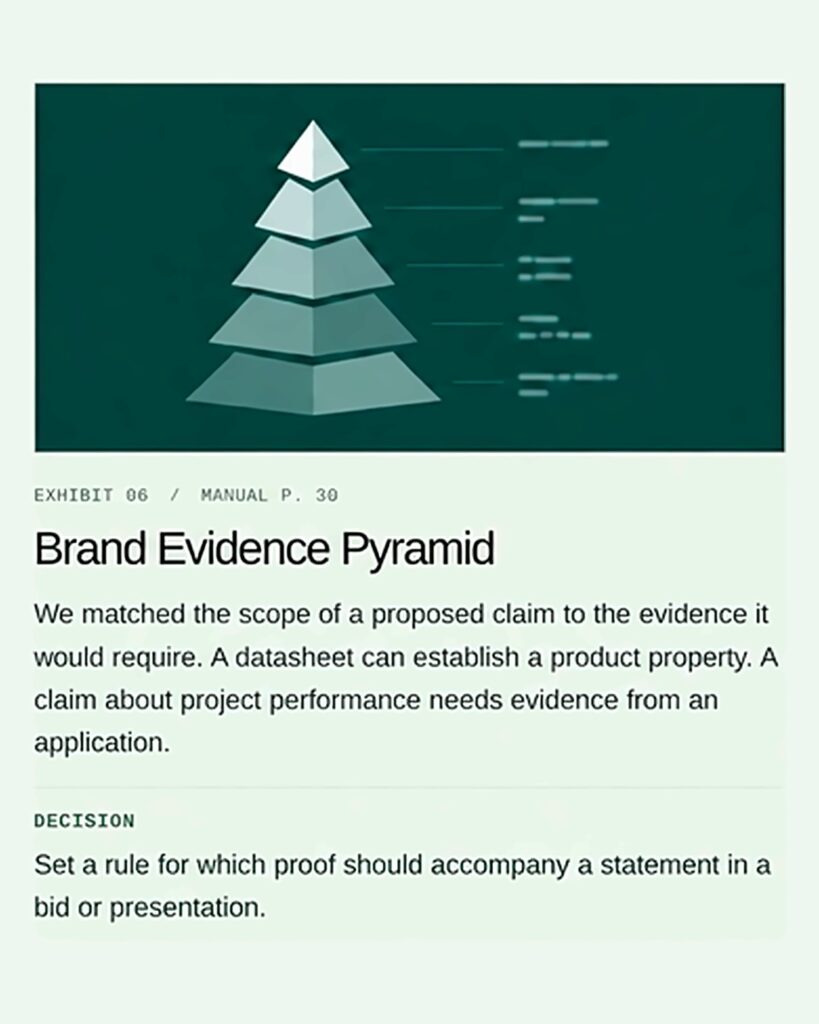
The Brand Benefit Ladder connected product features to their practical benefits and the value those benefits hold for the decision-maker. The Brand Evidence Pyramid established the relationship between a claim and the evidence needed to substantiate it.
A technical data sheet can substantiate a product property. A claim about performance at the project level requires evidence from actual application. This distinction provided a foundation for credible messaging and sales arguments.
3. Defining a consistent identity, promise, and messaging framework
We developed the brand promise around POLIECO’s ability to support a technical decision with clear guidance and relevant documentation.
We also translated brand values into practical expectations for behavior: being clear about the limitations of a technical claim, assigning responsibility for following up on an installation question, and aligning company communications with the experience it aims to deliver to customers and partners.
The Brand Identity Prism, Brand Wheel, and Brand Bull’s-eye helped organize the brand’s identity, central idea, and supporting reasons to believe. Through the Messaging House, we established a messaging hierarchy that can be adapted to corporate presentations, product content, and sales meetings.
4. Translating the strategy into practical applications
We proposed organizing the portfolio around project needs and applications while keeping the corresponding product families easy to identify.
For DRENOPAL, we developed a proposed product page structure that starts with stormwater and groundwater management, then guides design engineers through project requirements, available configurations, and the technical data needed for system selection.
We also developed the POLIECO Resilience Hub concept as a single point of access to documentation, selection guidance, and project support. The proposal distinguishes existing capabilities from tools and programs that would require pilot testing before launch.
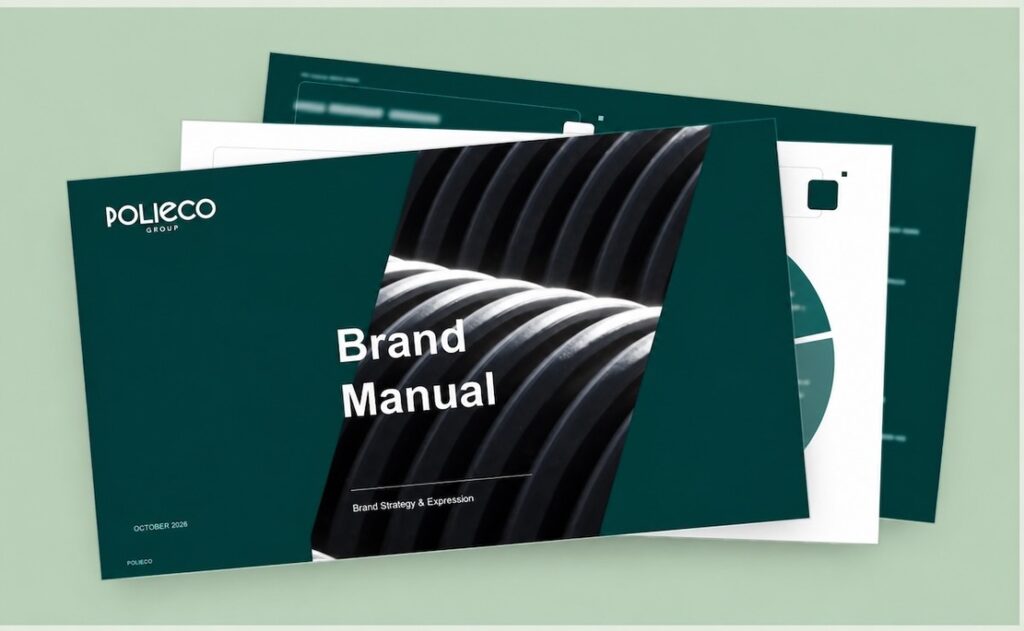
The project concluded with the delivery of a 65-page Brand Strategy Manual, bringing together POLIECO’s proposed positioning, brand promise, differentiators, and key messages for each audience. The study connects the company’s engineering expertise with specific reasons to choose POLIECO, giving management, marketing, and sales a shared strategic reference.
Management can use the positioning to assess new market opportunities. Marketing has guidance for developing content that explains the value of the products for each application and audience. Sales has a structured foundation for selecting the differentiators and technical evidence most relevant to each project.
The manual also provides a foundation for future corporate and product communications, from website content and sales presentations to technical documentation packages. The recommendations for portfolio architecture, DRENOPAL product presentation, and the POLIECO Resilience Hub offer concrete directions for the next phase of implementation, subject to the company’s evaluation. Together, they give POLIECO an evidence-informed strategic foundation for communicating what it offers, who benefits, and why customers should choose it.
SEO Strategy
for Germanos

SEO Strategy
for Appliances Recycling S.A.