Real Estate Marketing: What a Real Estate Project Needs Today to Stand Out
The real estate market remains highly active. According to data from the Bank of Greece, apartment prices increased by 5.7% year-on-year in the first quarter of 2026, continuing the upward trend of recent years.
An active market, however, also means greater competition.
New residential developments, tourism properties, investment projects and mixed-use developments are competing for the attention of the same buyer and investor audiences. In this environment, a good property is not enough on its own.
It needs to be presented the right way.
Real Estate Marketing is not simply about advertising a property on Google, social media or property portals. It is the process through which a real estate project establishes a clear market position, a strong identity, an effective digital presence and an organised system for attracting prospective buyers or investors.
And that process begins long before the first campaign goes live.
1. Understanding the Project Before Marketing
Every real estate project is different.
Its location, architecture, build quality, amenities, price point, target audience, intended use and investment profile all create a different commercial reality.
That is why the first step cannot be:
“Which channels should we advertise on?”
The right question is:
“What exactly do we have to offer, to whom, and why should they choose it?”
Before any communication begins, we need to understand:
- the project itself and its competitive advantages,
- the area and its market dynamics,
- competing developments,
- the different buyer or investor profiles,
- the real decision-making criteria,
- the commercial objectives of the project.
Without this foundation, even a well-designed campaign may simply generate more visibility for an unclear message.Χωρίς αυτή τη βάση, ακόμη και μια καλοσχεδιασμένη καμπάνια μπορεί απλώς να δημιουργήσει περισσότερη προβολή ενός ασαφούς μηνύματος.
2. Positioning: Why Should Someone Choose This Property?
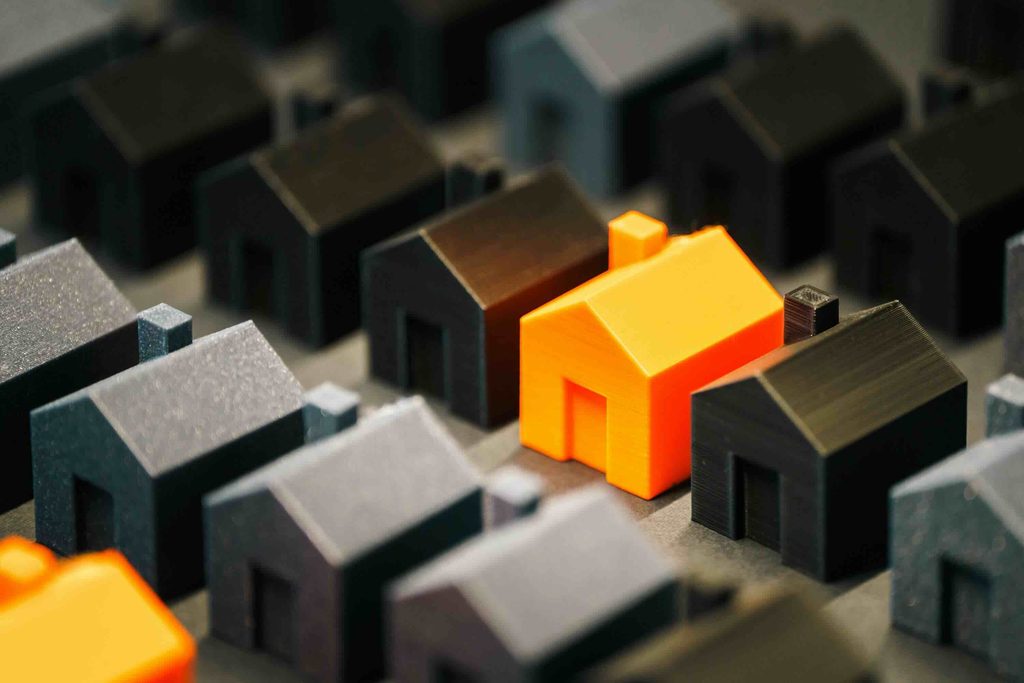
Positioning is perhaps the most critical – and often overlooked – part of real estate marketing.
Two properties may be in the same area, offer a similar amount of space and have comparable features, yet appeal to completely different audiences.
One may be positioned as an investment opportunity.
Another as a contemporary way of urban living.
A third may be defined by its architecture, privacy, location or a specific lifestyle.
Marketing needs to turn the property’s technical features into a clear value proposition.
Not simply:
“contemporary apartments with exceptional build quality.”
But a clear answer to:
Who was this project created for, and what makes it different from the other options?
The brand, website, content and campaigns should then flow from that answer.
3. Property Branding: Turning the Property into a Brand
In a professionally developed real estate project, we are not selling square metres alone.
We are shaping perception.
Property Branding gives the project a recognisable identity and helps the audience perceive it as a complete proposition rather than just another property listing.
Depending on the size and nature of the project, this may include:
- naming,
- logo and visual identity,
- colour and typographic direction,
- messaging,
- tone of voice,
- sales presentation,
- brochures and other sales collateral,
- overall art direction.
Branding becomes even more important when a property is still under development and prospective buyers are being asked to understand the value of a project before they can see it completed.
In this case, the brand, renders, storytelling and overall presentation act as a bridge between what is being built and what the buyer understands they are going to acquire.
4. Website και Digital Experience
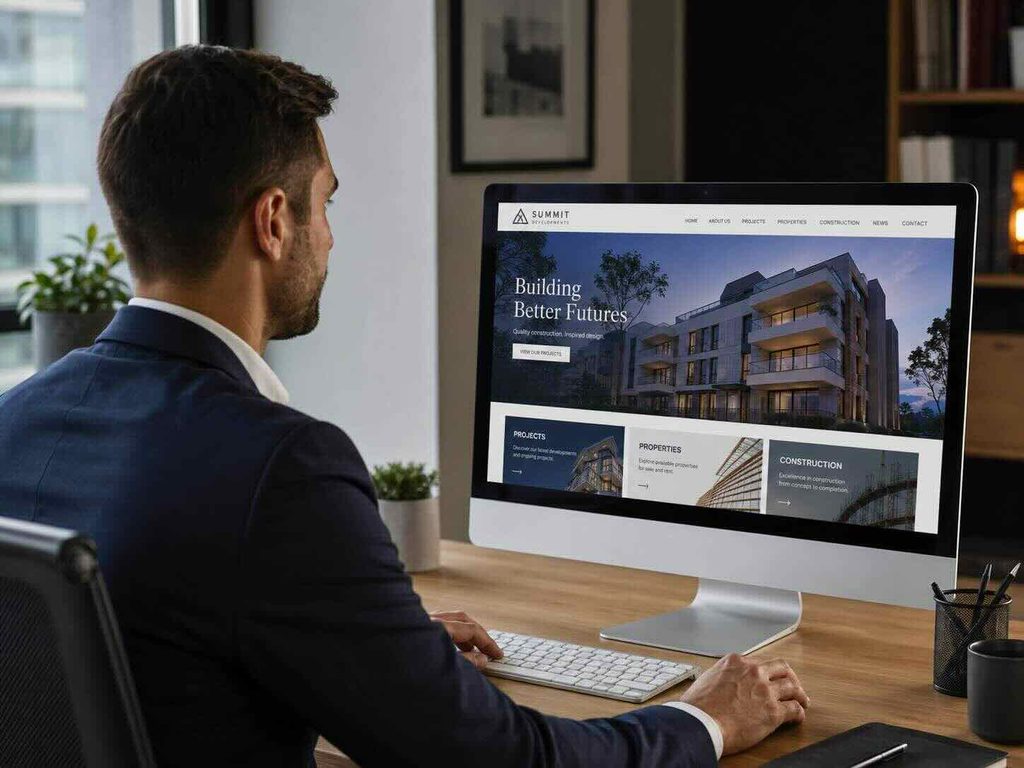
Today, a prospect’s first meaningful interaction with a project is very likely to happen online.
They may see an ad, search for the project on Google, visit the website or look for more information about the area and the developer.
The website, therefore, should not function merely as a digital brochure.
It needs to answer the prospect’s key questions quickly:
What is it? Where is it located? Why is it worth considering? What options are available? Who is behind the project? And how can I learn more?
An effective real estate website or microsite needs:
- clear information architecture,
- a strong visual presentation,
- easy navigation on mobile devices,
- fast loading times,
- a clear presentation of property types and features,
- location information and points of interest,
- floor plans, renders, photography or video where needed,
- prominent calls to action,
- well-designed enquiry forms.
Design matters. But without UX, the right information and a clear conversion path, it remains just design.
5. Content That Creates Desire and Builds Trust
A property is a high-involvement purchase.
The decision is not made because of an impressive render or an Instagram post.
Prospective buyers want to understand the project, the area, the developer, the features, its potential value and – depending on the case – the investment outlook.
That is why content needs to work on multiple levels.
Strong imagery, video, architectural renders and social content are certainly important.
But meaningful information is equally important.
Articles about the area, presentations of the concept, the architectural approach, amenities, construction progress, FAQs and investment information can create a far stronger content ecosystem around the project.
Aesthetics create the first impression.
Information builds trust.
You need both.
6. SEO και Search Visibility

SEO in Real Estate Marketing is not only about ranking for the project’s name.
A prospective buyer may be searching for:
- new-build apartments in a specific area,
- investment properties,
- homes of a specific type,
- information about a particular area,
- real estate developments in Athens or another destination,
- properties for sale in Greece.
These searches happen at different stages of the buying journey.
With the right SEO strategy, a project can gain visibility not only when someone already knows its name, but also while they are still researching and comparing options.
At the same time, well-organised information, clearly defined entities, structured data and meaningful content improve the project’s ability to be understood by modern AI search and answer engines.
Search visibility is no longer limited to traditional Google results.
It is about how easily a project can be found, understood and evaluated online.
7. Performance Marketing with a Clear Objective
Google Ads, Meta Ads and other paid media can significantly accelerate a project’s visibility.
Provided they are used properly.
The logic of:
“we run ads and wait for leads”
is not enough.
Campaigns need to connect with the customer journey.
Someone seeing the project for the first time needs a different message from someone who has already visited the website, reviewed the floor plans or returned several times.
What is needed, therefore, is a combination of:
Awareness → Consideration → Conversion → Remarketing.
And above all, the right targeting.
The objective is not to put the project in front of as many people as possible.
It is to put it in front of the right people.
8. We Don’t Just Want More Leads. We Want Better Leads.
This is where one of the most important mistakes in Real Estate Marketing appears.
The success of a campaign cannot be judged only by the number of forms submitted.
A project may generate dozens of leads that lack genuine interest, purchasing power or real intent to buy.
The right question is:
How many of those leads have real commercial value?
That is why marketing and sales need to be connected.
We track not only:
- impressions,
- clicks,
- website traffic,
- cost per lead,
but also:
- lead quality,
- qualified enquiries,
- appointments,
- site visits,
- the source of the highest-quality leads,
- conversion into a genuine commercial opportunity.
In real estate, the cheapest lead is not necessarily the best lead.
Real Estate Marketing Should Work as a System
Positioning without the right presentation is not enough.
A strong brand without traffic is not enough.
Traffic without the right website is not enough.
Leads without qualification and follow-up are not enough either.
Truly effective Real Estate Marketing connects all these elements in one integrated process:
Project Understanding → Audience Strategy → Positioning → Property Branding → Digital Experience → Content → SEO → Performance Marketing → Lead Generation → Measurement & Optimization.
That is the real difference between simply promoting a property and strategically marketing a real estate project.
A Good Project Deserves Marketing to Match
The quality of the property is, of course, the foundation.
But the market can only evaluate what it can see, understand and compare.
That is why a real estate project needs more than beautiful imagery and a media budget.
It needs a clear market position, a consistent identity, a strong digital experience and marketing built around specific commercial objectives.
At White Space, we approach Real Estate Marketing as an integrated process that connects strategy, branding, digital experience and performance.
Because the objective is not simply for more people to see a project.
It is for the right people to understand why it is worth choosing.